

Merkel Cell Carcinoma
Merkel cell carcinoma (MCC) was first described as a distinct type of skin cancer in 1972 by Cyril Toker, who originally named it trabecular carcinoma of the skin because of its appearance under the microscope. Later research showed that the cancer develops from or resembles Merkel cells, which are specialized cells involved in the sense of touch, leading to the name Merkel cell carcinoma.
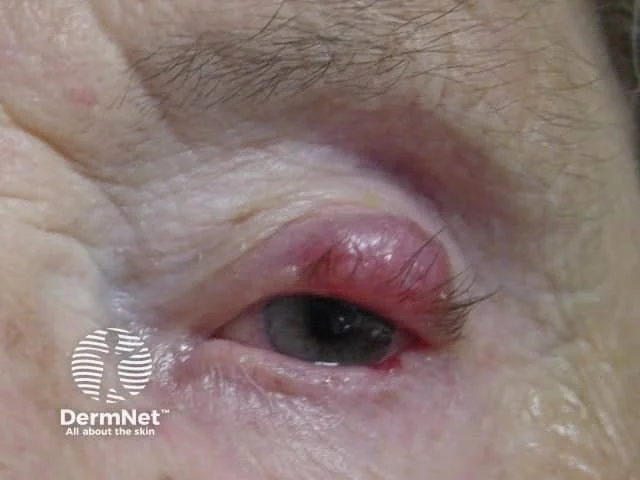
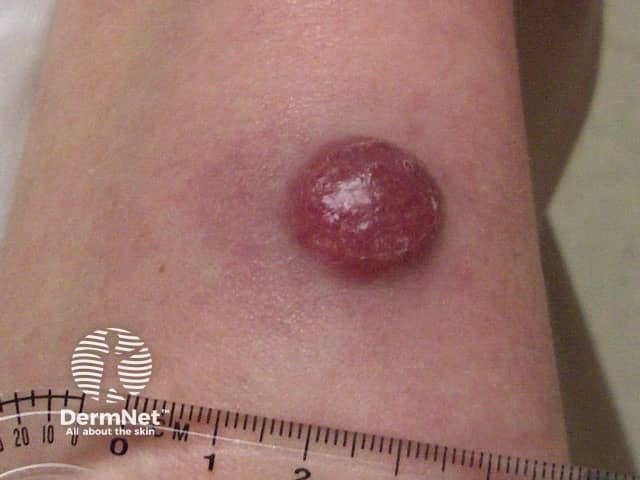
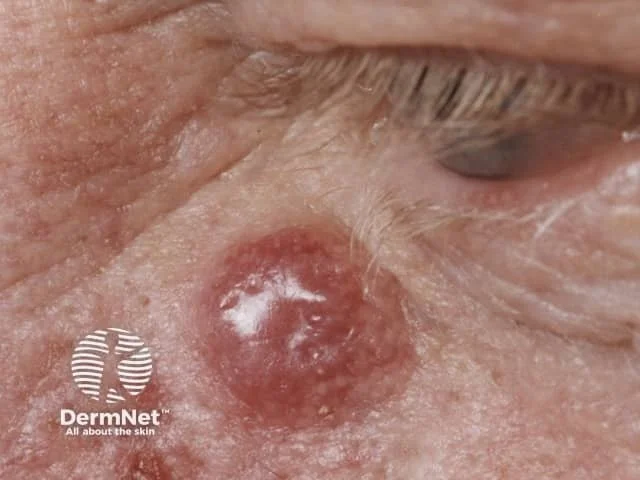
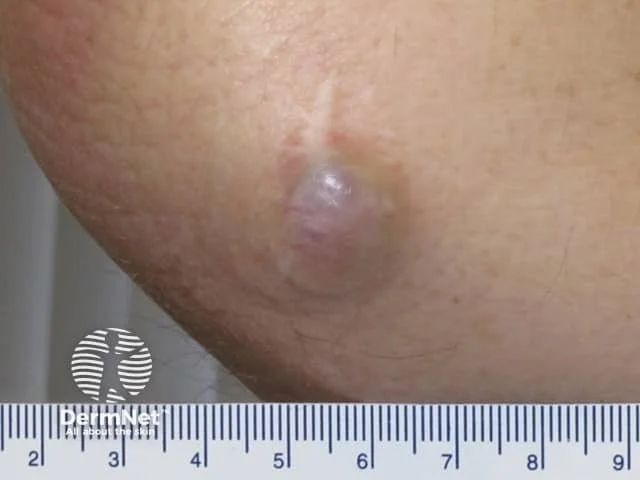
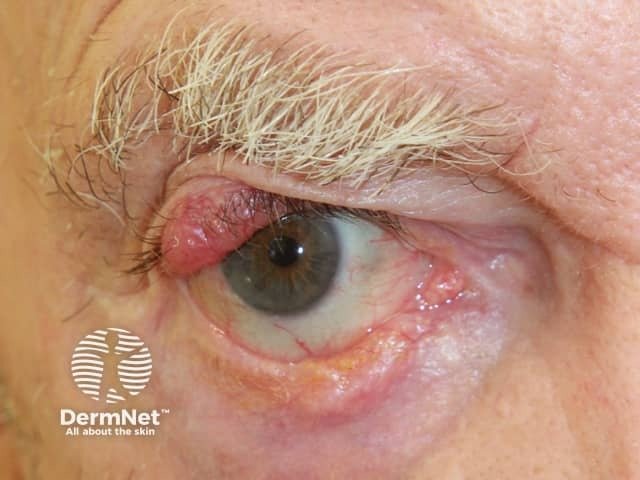
Merkel cell carcinoma most commonly develops on sun-exposed areas of the body, particularly the head, face, neck, arms, and hands. It is less commonly found on the legs or trunk. The tumor usually appears as a painless, firm, red, pink, or purple nodule on the skin.
There is no standard size for Merkel cell carcinoma because it can vary from person to person. Most tumors are diagnosed when they measure between 1 and 2 centimeters (10–20 millimeters or about 0.4–0.8 inches) in diameter. However, the tumor can grow rapidly and become much larger if left untreated.
The two main causes of Merkel cell carcinoma are excessive ultraviolet (UV) radiation exposure and infection with the Merkel cell polyomavirus (MCPyV). Ultraviolet radiation damages the DNA in skin cells, while the virus can contribute to genetic changes that lead to cancer in many cases.
Other factors that increase the risk of developing Merkel cell carcinoma include older age, fair skin, a weakened immune system, previous organ transplantation, chronic lymphocytic leukemia, HIV infection, and a history of other skin cancers. Most people who develop MCC have one or more of these risk factors.
Merkel cell carcinoma is most commonly diagnosed in adults over the age of 65. It is rare in younger adults and children, and the risk increases significantly with age, especially among people with extensive lifetime sun exposure or weakened immune systems.
Common treatments for Merkel cell carcinoma include wide local surgical excision, Mohs micrographic surgery in selected cases, sentinel lymph node biopsy, radiation therapy, and immunotherapy. Immunotherapy drugs such as Pembrolizumab, Avelumab, and Nivolumab are commonly used to treat advanced or metastatic disease because they help the immune system recognize and attack cancer cells.
Merkel cell carcinoma can be deadly because it is one of the most aggressive forms of skin cancer. It grows quickly and has a high risk of spreading to nearby lymph nodes and distant organs if not diagnosed and treated early. However, early detection and prompt treatment can significantly improve survival and reduce the risk of recurrence.
Visual images
〰️
Visual images 〰️
Medical references (sources)
American Cancer Society. (2024). Merkel cell skin cancer.
National Cancer Institute. (2024). Merkel cell carcinoma treatment (PDQ).
National Comprehensive Cancer Network. (2025). NCCN Clinical Practice Guidelines in Oncology: Merkel Cell Carcinoma.
Skin Cancer Foundation. (2024). Merkel cell carcinoma.
Toker, C. (1972). Trabecular carcinoma of the skin. Archives of Dermatology, 105(1), 107–110.)