

Melanoma
Melanoma has been recognized for centuries, but the first detailed medical description was published in 1804 by French physician René Théophile Hyacinthe Laennec. Later, in 1820, William Norris documented that melanoma could spread to other parts of the body and suggested that it might have a hereditary component, helping establish melanoma as a distinct type of cancer.
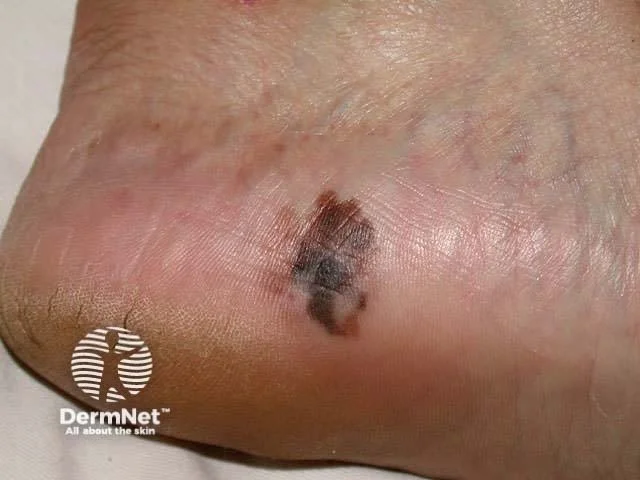
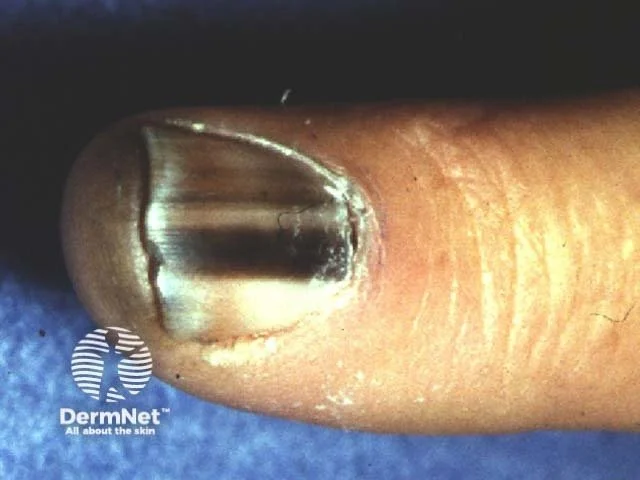
Melanoma can develop anywhere on the skin because it begins in melanocytes, the cells that produce skin pigment. It most commonly occurs on the back, chest, legs, arms, face, and neck. In men, melanoma is most often found on the back and trunk, while in women it is more commonly found on the legs. Melanoma can also develop in the eyes, under the fingernails or toenails, and on mucous membranes, although these locations are less common.
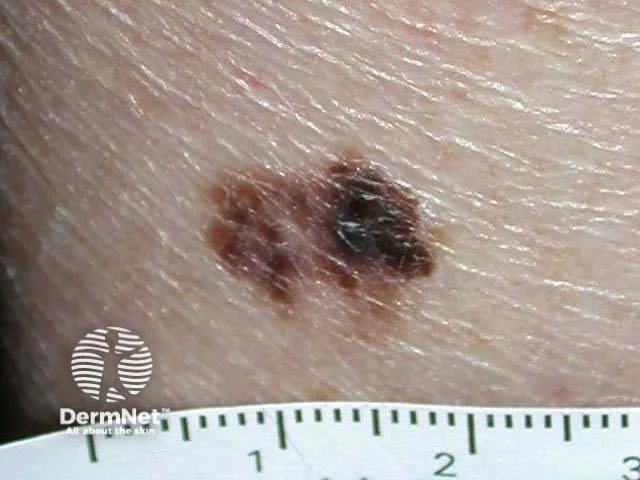
There is no standard size for melanoma because it can vary greatly depending on when it is detected. Many melanomas are first diagnosed when they measure 6 millimeters (0.6 centimeters or about 0.24 inches) or larger, which is approximately the size of a pencil eraser. However, some melanomas are detected when they are much smaller, especially with regular skin examinations and early screening.
The main cause of melanoma is DNA damage in melanocytes induced by ultraviolet (UV) radiation from sunlight and indoor tanning beds. This DNA damage can cause the melanocytes to grow uncontrollably and form cancer.
Other factors that increase the risk of melanoma include having fair skin, light-colored eyes, blond or red hair, a large number of moles, atypical (dysplastic) moles, a family history of melanoma, a weakened immune system, previous sunburns, older age, and inherited genetic mutations such as changes in the CDKN2A gene. Although these factors increase risk, melanoma can occur in people of any skin color.
Melanoma is most commonly diagnosed in adults between 55 and 64 years of age, but it can occur at almost any age. It is one of the most common cancers diagnosed in young adults, particularly women under the age of 30.
Common treatments for melanoma include surgical excision, Mohs micrographic surgery for selected early melanomas in certain locations, sentinel lymph node biopsy, immunotherapy, targeted therapy, radiation therapy, and chemotherapy in some advanced cases. Immunotherapy medications such as Pembrolizumab, Nivolumab, and Ipilimumab have significantly improved survival for many patients with advanced melanoma.
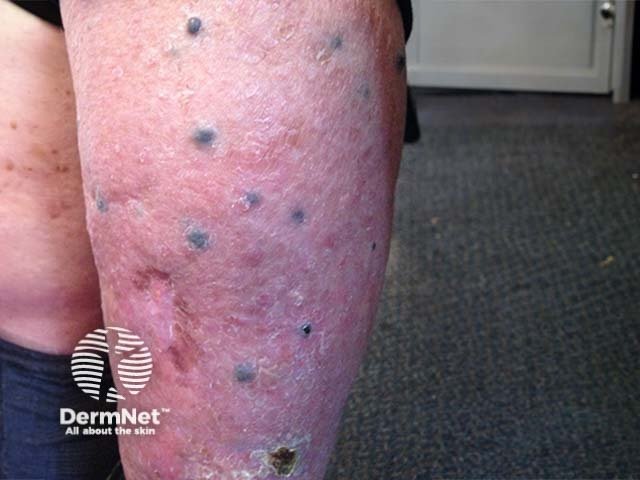
Melanoma is considered the deadliest form of skin cancer because it can spread rapidly to the lymph nodes and other organs if it is not detected and treated early. However, when melanoma is diagnosed in its earliest stages and surgically removed before it spreads, the five-year survival rate is greater than 99%. Early detection through routine skin examinations greatly improves the chances of successful treatment.
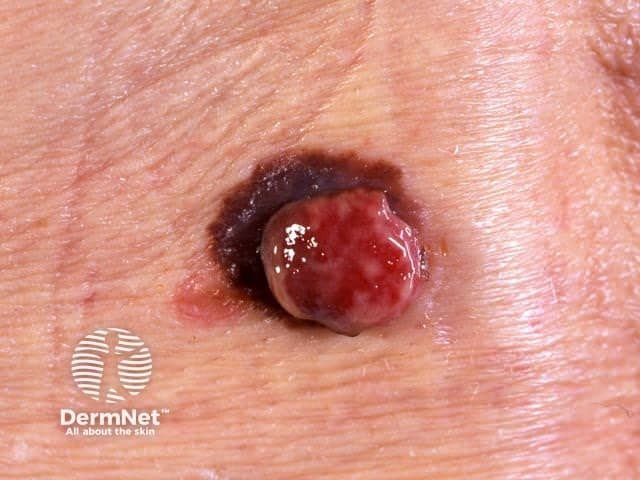
visual images
〰️
visual images 〰️
Medical references (source)
American Academy of Dermatology. (2024). Melanoma: Overview.
American Cancer Society. (2024). Melanoma skin cancer.
Mackie, R. M. (2003). History of melanoma. The Lancet, 361(9367), 571.
National Cancer Institute. (2024). Melanoma treatment (PDQ).
National Comprehensive Cancer Network. (2025). NCCN Clinical Practice Guidelines in Oncology: Cutaneous Melanoma.