

Cutaneous T-Cell Lymphoma (CTCL)
Cutaneous T-cell lymphoma (CTCL) was first recognized in 1806 when French dermatologist Jean-Louis-Marc Alibert described a skin disease that he called mycosis fungoides, the most common type of CTCL. Although Alibert believed the tumors resembled mushrooms rather than recognizing them as cancer, his work marked the first medical description of CTCL. In the twentieth century, researchers identified the disease as a lymphoma that originates from abnormal T lymphocytes.
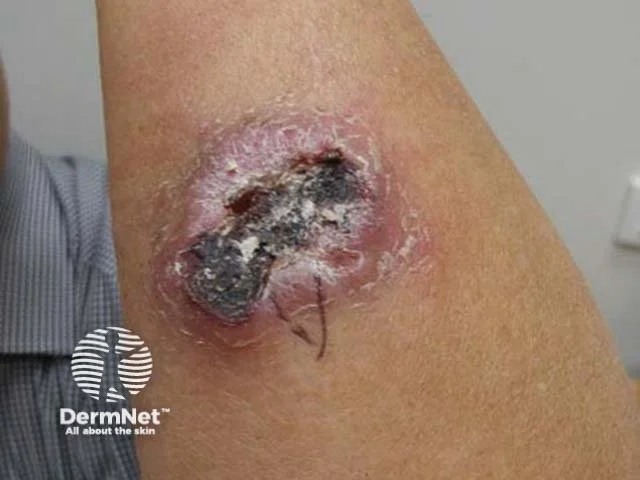
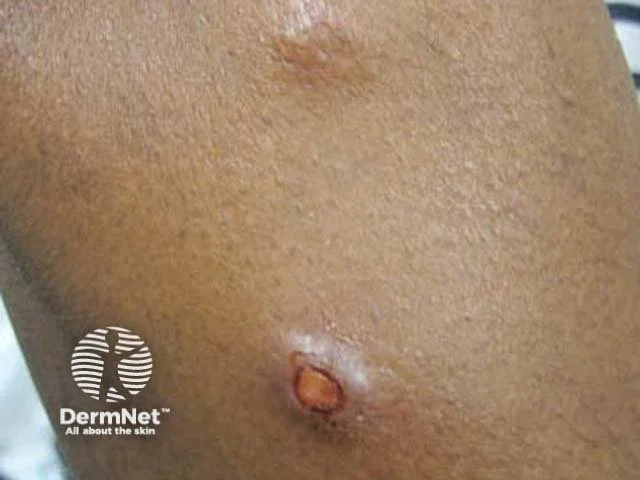
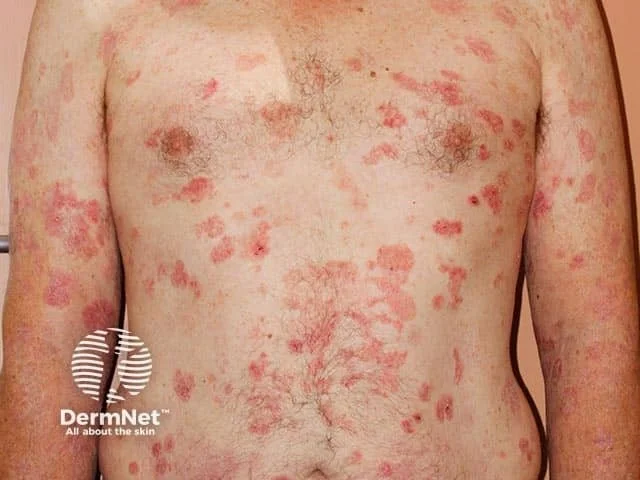
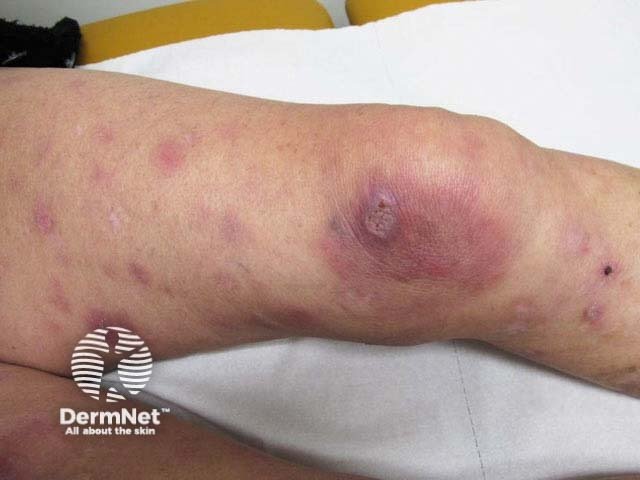
Cutaneous T-cell lymphoma most commonly develops on areas of the skin that are not regularly exposed to sunlight, including the torso, buttocks, breasts, hips, thighs, and upper arms. The disease often begins as flat, scaly patches or plaques, but may eventually form tumors that can appear on multiple areas of the body as the disease progresses.
There is no typical size for cutaneous T-cell lymphoma because it often appears as multiple patches or plaques rather than a single tumor. Early lesions may measure only 1–5 centimeters (10–50 millimeters or about 0.4–2 inches) across, but advanced disease may involve large portions of the skin or even most of the body's surface.
The exact cause of cutaneous T-cell lymphoma is unknown. Researchers believe the disease develops when T lymphocytes acquire genetic mutations that cause them to grow uncontrollably and accumulate in the skin. Unlike many skin cancers, CTCL is not caused by ultraviolet (UV) radiation. Although the exact cause is unknown, several factors may increase the risk of developing CTCL. These include older age, male sex, a family history of lymphoma, certain genetic changes, long-term immune system dysfunction, and chronic stimulation of the immune system. However, most people with CTCL do not have a clearly identifiable risk factor.
Cutaneous T-cell lymphoma is most commonly diagnosed in adults aged 50 to 60 years. Although the disease can occur in younger adults and children, it is much less common in those age groups.
Treatment for cutaneous T-cell lymphoma depends on the stage of the disease. Common treatments include topical corticosteroids, topical chemotherapy, phototherapy (UV light therapy), localized radiation therapy, total skin electron beam therapy, systemic medications, immunotherapy, targeted therapy, extracorporeal photopheresis, and stem cell transplantation for advanced cases. Medications such as Bexarotene, Mogamulizumab, and Brentuximab vedotin may be used depending on the disease subtype and stage.
Cutaneous T-cell lymphoma is not always deadly, especially when diagnosed early. Many patients with early-stage disease live for decades with proper treatment. However, advanced CTCL can spread to the lymph nodes, blood, and internal organs, making it a life-threatening cancer. Early diagnosis and appropriate treatment greatly improve long-term outcomes.
visual images
〰️
visual images 〰️

Medical References (Source)
American Cancer Society. (2024). Treating cutaneous T-cell lymphoma.
National Cancer Institute. (2024). Mycosis fungoides (cutaneous T-cell lymphoma) treatment (PDQ).
National Comprehensive Cancer Network. (2025). NCCN Clinical Practice Guidelines in Oncology: Primary Cutaneous Lymphomas.
Willemze, R., Cerroni, L., Kempf, W., et al. (2019). The 2018 update of the WHO-EORTC classification for primary cutaneous lymphomas. Blood, 133(16), 1703–1714.