

Extramammary Paget's Disease
Extramammary Paget's disease (EMPD) was first described in 1889 by French dermatologist Henri Radcliffe Crocker. Crocker reported a disease similar to Paget disease of the breast but occurring in the genital region. The breast form of the disease was first described in 1874 by English surgeon Sir James Paget, after whom the disease is named.
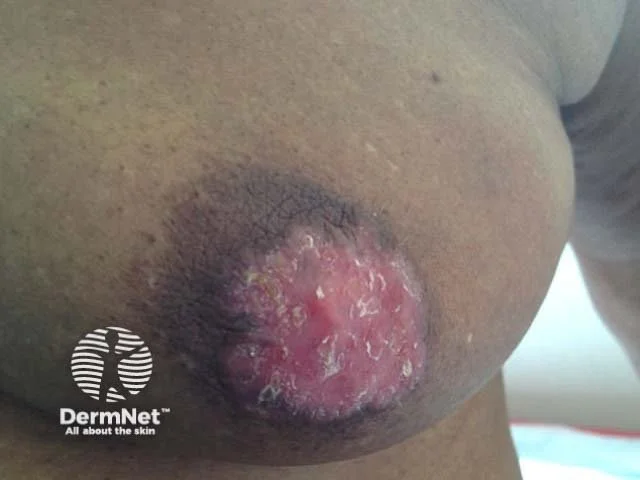
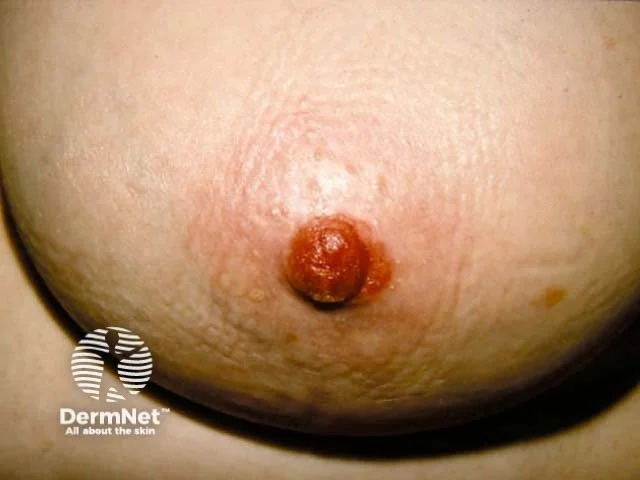
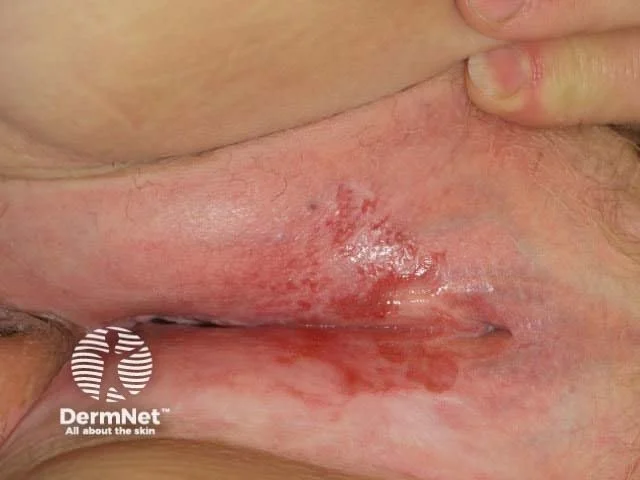
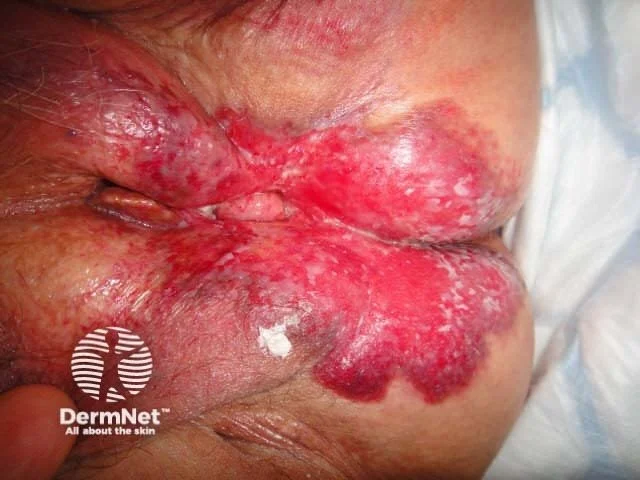
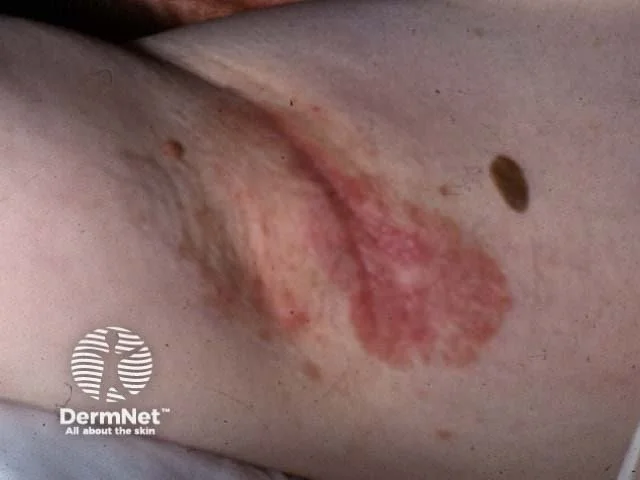
Extramammary Paget's disease most commonly develops in areas of the body that contain apocrine sweat glands, including the vulva, scrotum, penis, perianal region, groin, and armpits (axillae). The disease usually appears as a slowly enlarging red, scaly, or itchy patch on the skin.
There is no standard size for extramammary Paget's disease because the affected area varies among individuals. At diagnosis, lesions often measure 2–10 centimeters (20–100 millimeters or about 0.8–4 inches) across, but untreated disease can spread over much larger areas of the skin.
The exact cause of extramammary Paget's disease is not fully understood. Most cases are believed to begin when abnormal glandular cells develop within the epidermis, the outer layer of the skin. In some patients, EMPD is associated with an underlying cancer of the sweat glands or nearby organs, while in others it develops as a primary skin cancer without another identifiable cause.
Although the exact cause remains unknown, researchers have identified several factors that may increase the risk of extramammary Paget's disease. These include older age, chronic inflammation, genetic mutations, and the presence of cancers involving the urinary tract, gastrointestinal tract, prostate, cervix, or other nearby organs. Because of these possible associations, patients diagnosed with EMPD are often evaluated for underlying malignancies.
Extramammary Paget's disease is most commonly diagnosed in adults over the age of 50, with the highest incidence occurring in people between 60 and 80 years old. The disease is rare in younger adults and children.
The most common treatment for extramammary Paget's disease is surgical removal of the affected skin, often using Mohs micrographic surgery or wide local excision to reduce the risk of recurrence. Other treatments may include radiation therapy, topical medications such as Imiquimod, laser therapy, photodynamic therapy, chemotherapy, targeted therapy, or immunotherapy, depending on the disease stage and whether an underlying cancer is present.
Extramammary Paget's disease is usually not deadly when it is confined to the skin and treated early. However, if the disease becomes invasive or is associated with an underlying internal cancer, it can spread to lymph nodes or other organs and become life-threatening. Early diagnosis and complete treatment provide the best chance for a favorable outcome.
visual image
〰️
visual image 〰️
Medical References (source)
American Cancer Society. (2024). Skin cancer and rare skin tumors.
Crocker, H. R. (1889). Paget's disease affecting the scrotum and penis. Transactions of the Pathological Society of London.
National Cancer Institute. (2024). Extramammary Paget disease.
National Comprehensive Cancer Network. (2025). NCCN Clinical Practice Guidelines in Oncology: Squamous Cell Skin Cancer and Rare Cutaneous Malignancies.