

Basal Cell Carcinoma (BCC)
Basal cell carcinoma does not have a single discoverer. One of the earliest documented clinical descriptions of the disease was published in 1827 by French physician Jacob Arthur Nicolas Sigaud, and it was later recognized as a distinct type of skin cancer through advances in pathology during the late nineteenth century.
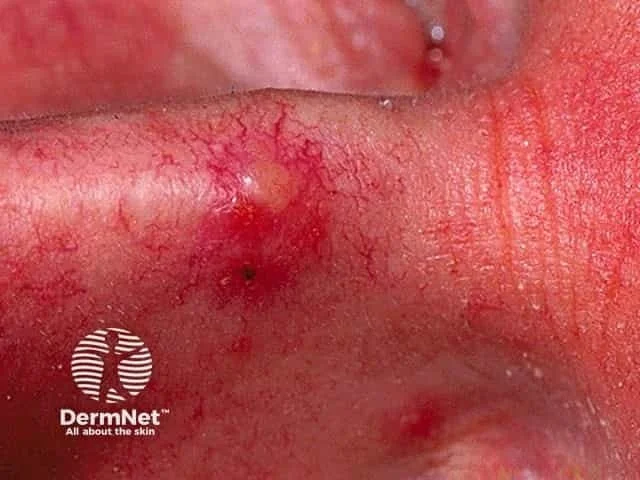
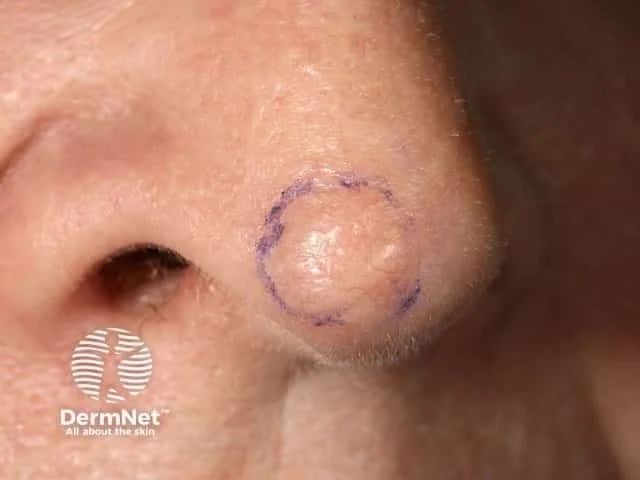
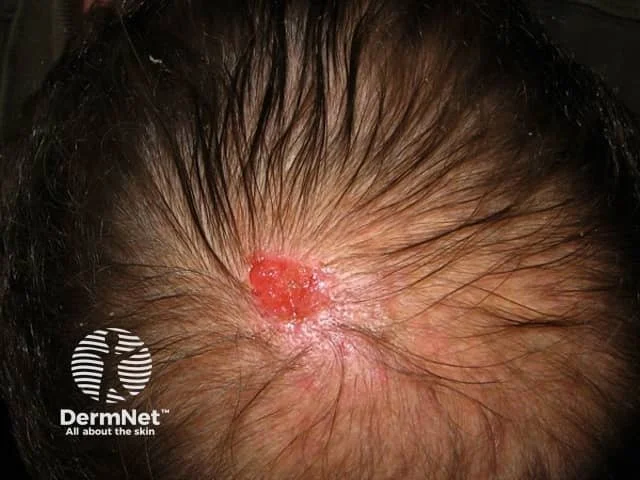
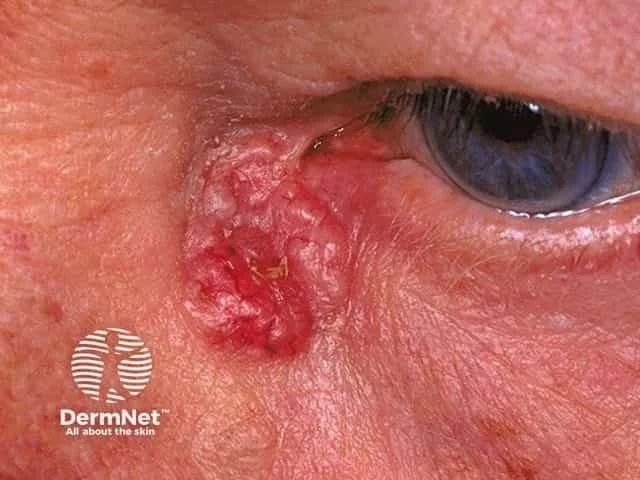
Basal cell carcinoma most commonly develops on areas of the body that receive the greatest amount of sun exposure, including the face, nose, ears, eyelids, forehead, scalp, neck, shoulders, upper back, chest, and arms. Approximately 80–85% of basal cell carcinomas occur on the head and neck.
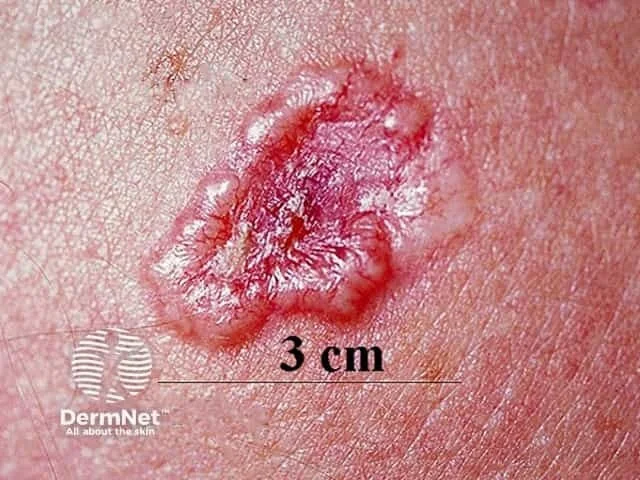
There is no standard size for basal cell carcinoma because the tumor can vary depending on how long it has been growing. Most basal cell carcinomas are diagnosed when they measure between 2 and 10 millimeters (0.2–1 centimeter, or about 0.08–0.4 inches) in diameter, although untreated tumors can continue to grow and become several centimeters wide.
The main cause of basal cell carcinoma is prolonged exposure to ultraviolet (UV) radiation from the sun or indoor tanning beds. UV radiation damages the DNA in skin cells, which can lead to abnormal cell growth and eventually the development of basal cell carcinoma.
Other factors that increase the risk of developing basal cell carcinoma include having fair skin, light-colored eyes, blond or red hair, older age, a family history of skin cancer, previous skin cancers, exposure to arsenic, radiation therapy, a weakened immune system, and inherited genetic disorders such as Gorlin syndrome and xeroderma pigmentosum
Basal cell carcinoma is most commonly diagnosed in adults over the age of 50, although it is becoming more common in younger adults because of increased exposure to ultraviolet radiation and the use of indoor tanning beds.
Common treatments for basal cell carcinoma include surgical excision, Mohs micrographic surgery, curettage and electrodesiccation, cryotherapy, topical medications such as imiquimod or fluorouracil, radiation therapy, and targeted medications for advanced cases. The choice of treatment depends on the size, location, and subtype of the tumor.
Basal cell carcinoma is rarely deadly because it usually grows slowly and almost never spreads to other parts of the body. However, if left untreated, it can invade nearby skin, cartilage, muscle, and bone, causing significant tissue damage. When diagnosed early and treated appropriately, the cure rate is approximately 95–99%.
visual images
〰️
visual images 〰️
Medical references (source)
American Academy of Dermatology. (2024). Basal cell carcinoma: Overview.
American Cancer Society. (2024). Basal and squamous cell skin cancer.
Cameron, M. C., & Hilsinger, R. L. (1983). Basal cell carcinoma: Historical review, classification, and current concepts.Archives of Otolaryngology.
National Cancer Institute. (2024). Skin cancer (including basal cell carcinoma) treatment (PDQ).
National Comprehensive Cancer Network. (2024). NCCN Clinical Practice Guidelines in Oncology: Basal Cell Skin Cancer.
Skin Cancer Foundation. (2024). Basal cell carcinoma.